Reiwa, Shōwa, Meiji — How Japanese Era Names Work
Japan runs on two calendars at once. Learn how era names (gengō) work, what Reiwa means, and how to convert years like a local government form expects.
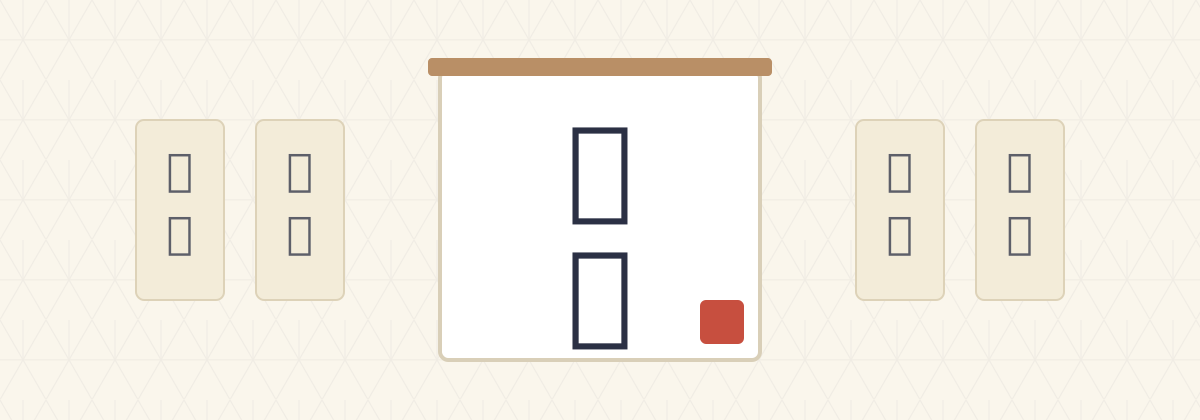
Japan officially uses two calendars: the Western one, and 元号 (gengō) — era names tied to each emperor's reign. Documents, driver's licenses and coins say things like 令和6年 (“Reiwa year 6”). Each era gets a two-kanji name chosen with enormous care; when 令和 (Reiwa) was announced live on TV in 2019, the whole country stopped to watch the cabinet secretary lift a calligraphy board.
The modern eras
| Word | Reading | Meaning |
|---|---|---|
| 明治 | めいじ meiji | Meiji (1868–1912) — Japan modernizes at high speed |
| 大正 | たいしょう taishou | Taishō (1912–1926) — short, liberal, jazz-age flavor |
| 昭和 | しょうわ shouwa | Shōwa (1926–1989) — war, recovery, and the economic miracle; now also means “retro” |
| 平成 | へいせい heisei | Heisei (1989–2019) — the era millennials grew up in |
| 令和 | れいわ reiwa | Reiwa (2019–) — “beautiful harmony”, from the poetry anthology Man'yōshū |
| 元号 | げんごう gengou | era name system |
Converting years without crying
The trick for Reiwa: subtract 2018. So 2026 is Reiwa 8 (令和8年). For Heisei, subtract 1988; for Shōwa, subtract 1925. Era year 1 is called 元年 (gannen), not “year 1” — you'll see 令和元年 on anything from 2019. Forms usually let you circle which calendar you're using, marked 西暦 (Western calendar) or the era kanji.
Eras as culture
Era names are moods. 昭和レトロ (Shōwa retro) is a whole aesthetic — think 1970s coffee shops with cream soda. Calling something 平成 teases it for being recently outdated, the way English uses “so 2010s”. The kanji themselves are everyday characters: 明 (bright), 和 (harmony) — see 明 and 和, both JLPT kanji you'll meet constantly.
🔊 Tap any word in the vocabulary tables to hear it spoken.
More in History & Tradition
- Sun, Moon and Five Elements — The Japanese Days of the Week
- The Twelve Zodiac Animals (Eto) — Why Everyone Knows Your Birth Year
- Matsuri — Japanese Festivals, from Mikoshi to Fireworks
- Oshōgatsu — How Japan Celebrates New Year
- Sumo — Rituals, Ranks and the Words of the Dohyō
- Japanese Castles — Reading Himeji, Osaka and the Words on the Walls
- Japanese History in Ten Periods — From Jōmon Pottery to Reiwa
- Shrines and Temples — How to Visit Respectfully
- Seijin Shiki — Japan's Coming-of-Age Ceremony
- Origami — The Art of Folding Paper
- Obon — Japan's Summer Festival for Ancestors
- Shodo — The Art of Japanese Calligraphy