Matsuri — Japanese Festivals, from Mikoshi to Fireworks
Lantern-lit streets, portable shrines, goldfish scooping and yukata: the vocabulary and rhythms of the Japanese festival summer.
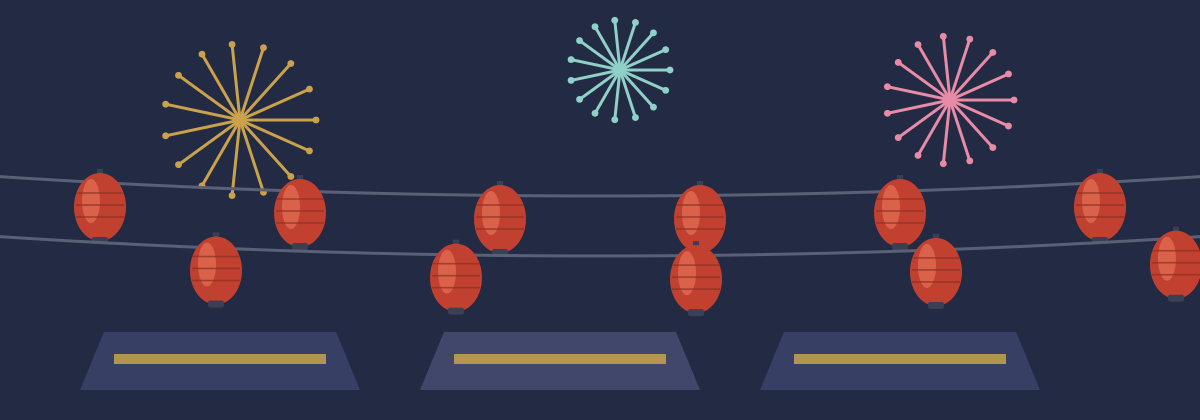
Walk through any Japanese town in July or August and you may stumble into a 祭り (matsuri) — drums in the distance, red lanterns strung between poles, the smell of grilled soy sauce. Festivals began as Shintō rituals to thank or appease the gods, and the sacred core is still there: the highlight of many matsuri is carrying the 神輿 (mikoshi), a portable shrine, through the streets on the shoulders of shouting locals.
Festival vocabulary
| Word | Reading | Meaning |
|---|---|---|
| 祭り | まつり matsuri | festival |
| 神輿 | みこし mikoshi | portable shrine carried through the streets |
| 屋台 | やたい yatai | food stalls — the real reason many people come |
| 浴衣 | ゆかた yukata | summer cotton kimono, standard festival wear |
| 花火大会 | はなびたいかい hanabitaikai | fireworks festival |
| 盆踊り | ぼんおどり bonodori | circle dance of the Obon season |
| 金魚すくい | きんぎょすくい kingyosukui | goldfish scooping with a paper scoop |
| かき氷 | かきごおり kakigoori | shaved ice with syrup |
The yatai food crawl
Festival stalls have a canon: takoyaki (octopus balls), yakisoba (fried noodles), taiyaki (fish-shaped sweet pancake), ringo-ame (candy apple), and かき氷 shaved ice with dangerously bright syrup. Everything costs a few hundred yen and is eaten standing up. See more food decoding in Japanese food words.
Fireworks as a summer ritual
花火大会 (fireworks festivals) are enormous — major ones launch tens of thousands of shells while crowds watch from riverbanks on picnic sheets. The traditional shout when a big one blooms is 「たまや〜!」 (Tamaya!), the name of an Edo-period fireworks maker. Couples in yukata at a fireworks festival is the definitive Japanese summer scene, and the kanji pair is beautifully literal: 花 flower + 火 fire.
Famous ones to know
Kyoto's Gion Matsuri (all of July, giant wheeled floats), Aomori's Nebuta (illuminated warrior floats), Tokushima's Awa Odori (dance festival with the motto “you're a fool if you dance and a fool if you watch — so dance”), and Sapporo's Yuki Matsuri (snow sculptures, the winter exception). Every neighborhood shrine has a smaller one; those are often the most fun.
🔊 Tap any word in the vocabulary tables to hear it spoken.
More in History & Tradition
- Reiwa, Shōwa, Meiji — How Japanese Era Names Work
- Sun, Moon and Five Elements — The Japanese Days of the Week
- The Twelve Zodiac Animals (Eto) — Why Everyone Knows Your Birth Year
- Oshōgatsu — How Japan Celebrates New Year
- Sumo — Rituals, Ranks and the Words of the Dohyō
- Japanese Castles — Reading Himeji, Osaka and the Words on the Walls
- Japanese History in Ten Periods — From Jōmon Pottery to Reiwa
- Shrines and Temples — How to Visit Respectfully
- Seijin Shiki — Japan's Coming-of-Age Ceremony
- Origami — The Art of Folding Paper
- Obon — Japan's Summer Festival for Ancestors
- Shodo — The Art of Japanese Calligraphy