Japanese History in Ten Periods — From Jōmon Pottery to Reiwa
Samurai, shōguns and the world's oldest pottery: the ten-period skeleton of Japanese history that anime, dramas and museum labels all assume you know.
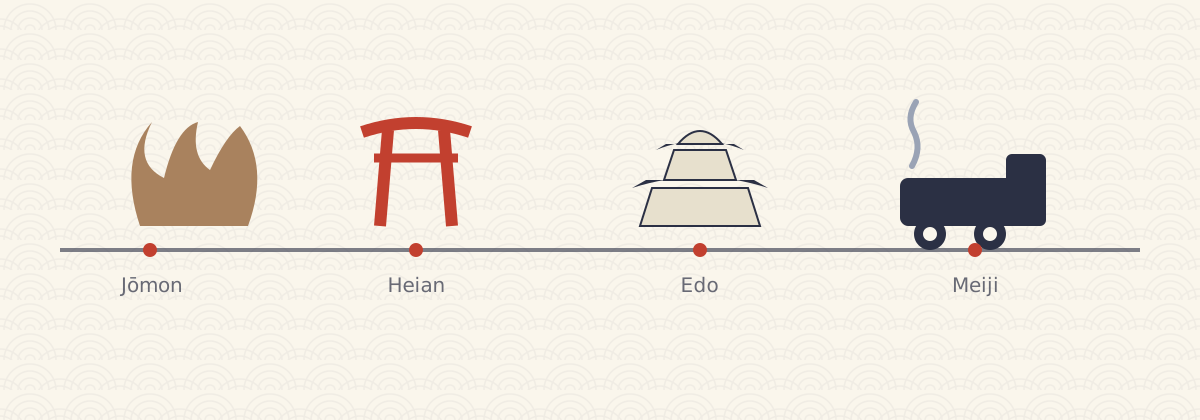
Japanese history is usually taught as a sequence of named periods — most named after where the government sat. Dramas, museums and anime assume you know the big ones: say 江戸時代 (Edo period) and every Japanese person pictures topknots, castles and woodblock prints. Here's the ten-period skeleton, with the kanji you'll see on every museum wall.
The main periods
| Word | Reading | Meaning |
|---|---|---|
| 縄文 | じょうもん joumon | Jōmon (to ~300 BC) — hunter-gatherers with some of the world's oldest pottery |
| 弥生 | やよい yayoi | Yayoi (~300 BC–300 AD) — rice farming arrives and changes everything |
| 飛鳥 | あすか asuka | Asuka (592–710) — Buddhism arrives; first constitutions |
| 奈良 | なら nara | Nara (710–794) — first great capital; the Great Buddha |
| 平安 | へいあん heian | Heian (794–1185) — court elegance; The Tale of Genji |
| 鎌倉 | かまくら kamakura | Kamakura (1185–1333) — the samurai take over |
| 室町 | むろまち muromachi | Muromachi (1336–1573) — zen, noh theater, and civil war |
| 戦国 | せんごく sengoku | Sengoku (~1467–1600) — the Warring States; every strategy game's favorite era |
| 江戸 | えど edo | Edo (1603–1868) — 250 years of peace, isolation and pop culture |
| 明治 | めいじ meiji | Meiji (1868–1912) — samurai to steam trains in one generation |
Three names to drop
The Sengoku era's “three unifiers” appear everywhere from taiga dramas to video games: Oda Nobunaga (the ruthless innovator), Toyotomi Hideyoshi (the peasant who reached the top), and Tokugawa Ieyasu (the patient one who won it all). A famous verse sums them up with a cuckoo that won't sing: Nobunaga kills it, Hideyoshi persuades it, Ieyasu waits.
Why Edo matters most for culture
Most things now sold as classic Japanese culture — sushi stalls, kabuki, ukiyo-e prints, fireworks festivals — are Edo-period urban pop culture. Even the modern era names continue the thread: see how era names work. Museum labels lean on the kanji 時代 (jidai, “period”) — with 時 (time) and 代 (generation), you can date any exhibit.
🔊 Tap any word in the vocabulary tables to hear it spoken.
More in History & Tradition
- Reiwa, Shōwa, Meiji — How Japanese Era Names Work
- Sun, Moon and Five Elements — The Japanese Days of the Week
- The Twelve Zodiac Animals (Eto) — Why Everyone Knows Your Birth Year
- Matsuri — Japanese Festivals, from Mikoshi to Fireworks
- Oshōgatsu — How Japan Celebrates New Year
- Sumo — Rituals, Ranks and the Words of the Dohyō
- Japanese Castles — Reading Himeji, Osaka and the Words on the Walls
- Shrines and Temples — How to Visit Respectfully
- Seijin Shiki — Japan's Coming-of-Age Ceremony
- Origami — The Art of Folding Paper
- Obon — Japan's Summer Festival for Ancestors
- Shodo — The Art of Japanese Calligraphy